

As African cities experience some of the most rapid urbanization rates in the world, the strain on our infrastructure is becoming increasingly visible. For the average commuter in cities like Lagos, Nairobi, or Johannesburg, heavy traffic isn't just an inconvenience—it's a daily reality that eats into productivity, drains financial resources, and impacts mental well-being.
The traditional approach to reducing traffic congestion has often been to build more roads. However, city planners and mobility experts are recognizing that we cannot simply pave our way out of gridlock. The future of smart cities in Africa doesn’t lie in more asphalt; it lies in smarter, more efficient use of the vehicles already on the road.
This is where shared mobility comes in. By shifting our perspective from individual car ownership to optimized, shared transportation networks, we can radically transform our urban landscapes.
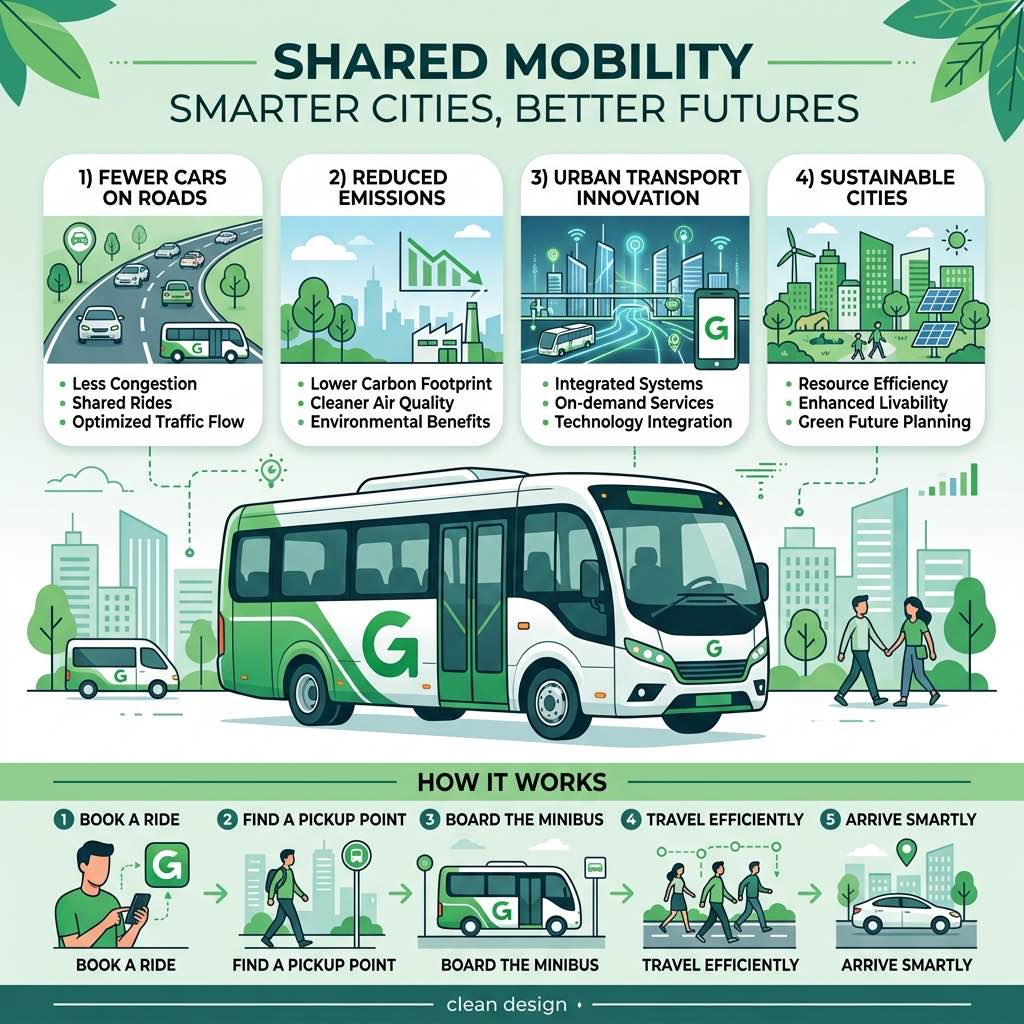
1. Fewer Cars on Roads, More People Moving
The math behind traffic congestion is straightforward: too many single-occupancy vehicles occupying too much space. In a typical traffic jam, the majority of cars carry only one person.
Shared mobility platforms like Gova Share tackle this inefficiency head-on. By grouping passengers traveling along the same corridors into a single, comfortable vehicle, we can effectively remove dozens of private cars from the road for every shared trip. This mass reduction in vehicle volume is the fastest, most scalable way to decongest our streets. Fewer cars mean less bottlenecking, faster commute times, and a smoother flow of traffic for everyone.
2. Reduced Emissions for Cleaner Air
The environmental cost of gridlock is staggering. Vehicles idling in bumper-to-bumper traffic burn excess fuel and release high concentrations of greenhouse gases and particulate matter, directly contributing to poor air quality and respiratory health issues in our urban centers.
Shared mobility isn't just a logistical solution; it's an environmental imperative. By consolidating trips, we drastically reduce the per-capita carbon footprint of daily commuting. When 10 people share one efficient ride rather than driving 10 separate cars, the reduction in carbon emissions is immediate and impactful.
3. Urban Transport Innovation
Transforming African mobility requires more than just putting buses on the road; it requires deep technological innovation. The backbone of modern shared mobility is data.
Through advanced routing algorithms, real-time demand mapping, and smart corridor systems, platforms can predict exactly where and when riders need transport. This means vehicles are deployed intelligently, eliminating the chaotic, unpredictable nature of traditional transit systems. Passengers get the reliability of a private ride with the efficiency of public transit. This technology-first approach is the cornerstone of building true smart cities in Africa, turning chaotic transit hubs into streamlined, predictable networks.
4. A Pathway to Sustainable Cities
Sustainability in urban planning means creating systems that can support population growth without collapsing under their own weight. African cities are projected to double in population over the next few decades. If vehicle ownership grows at the same rate, complete gridlock is inevitable.
Shared mobility provides a sustainable off-ramp from this trajectory. It offers an affordable, premium, and reliable alternative to buying a car, encouraging citizens to leave their vehicles at home—or avoid purchasing one altogether. By optimizing our transit corridors today, we are laying the groundwork for resilient, sustainable cities that prioritize people over parking spaces.
The Road Ahead
The congestion crippling our cities is not an unsolvable problem; it is an inefficiency waiting to be optimized. By embracing shared mobility, we can reclaim our time, clean our air, and build transportation systems that actually work for the people who rely on them.
At Govah, we believe that arriving together isn't just a better way to commute—it's the only way forward for Africa’s rapidly growing cities.